ENIM
UNICEF and the Nutrition Sector, Cox's Bazar
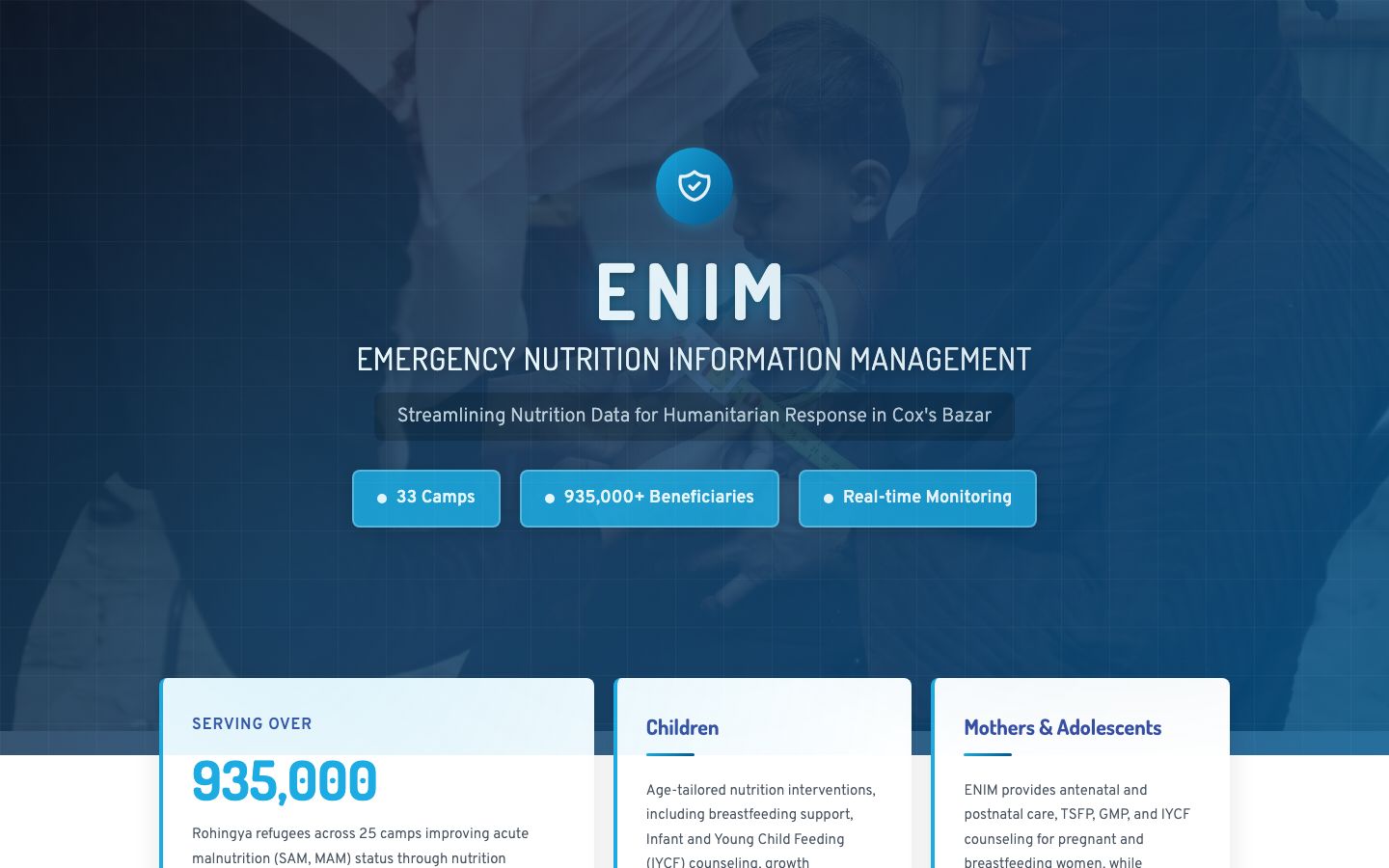
The nutrition information system for the Rohingya response in Cox's Bazar: one case-based record for more than 935,000 people across 33 camps, with real-time monitoring.
Read the case study: ENIM →Health, humanitarian and public sector
Ready-to-deploy digital solutions that help government health programmes, UN agencies and NGOs prevent illness before it needs treatment: community awareness campaigns, household screening, immunisation and growth monitoring, health cards and referral, online and offline. They are proven in the field on HGSP Monitoring, which we delivered for UNICEF, and on ENIM, which we develop and maintain today.
Proven on: HGSP Monitoring (delivered), ENIM (live), ELAP (live)
The short version
Most illness that reaches a hospital could have been prevented or caught earlier in the community. Yet prevention is the hardest work to plan and prove: awareness sessions and household visits are recorded on paper, screening results do not follow a person to the clinic, missed check-ups go unnoticed, and supervisors cannot see which preventive services actually reached which households until reports are compiled by hand.
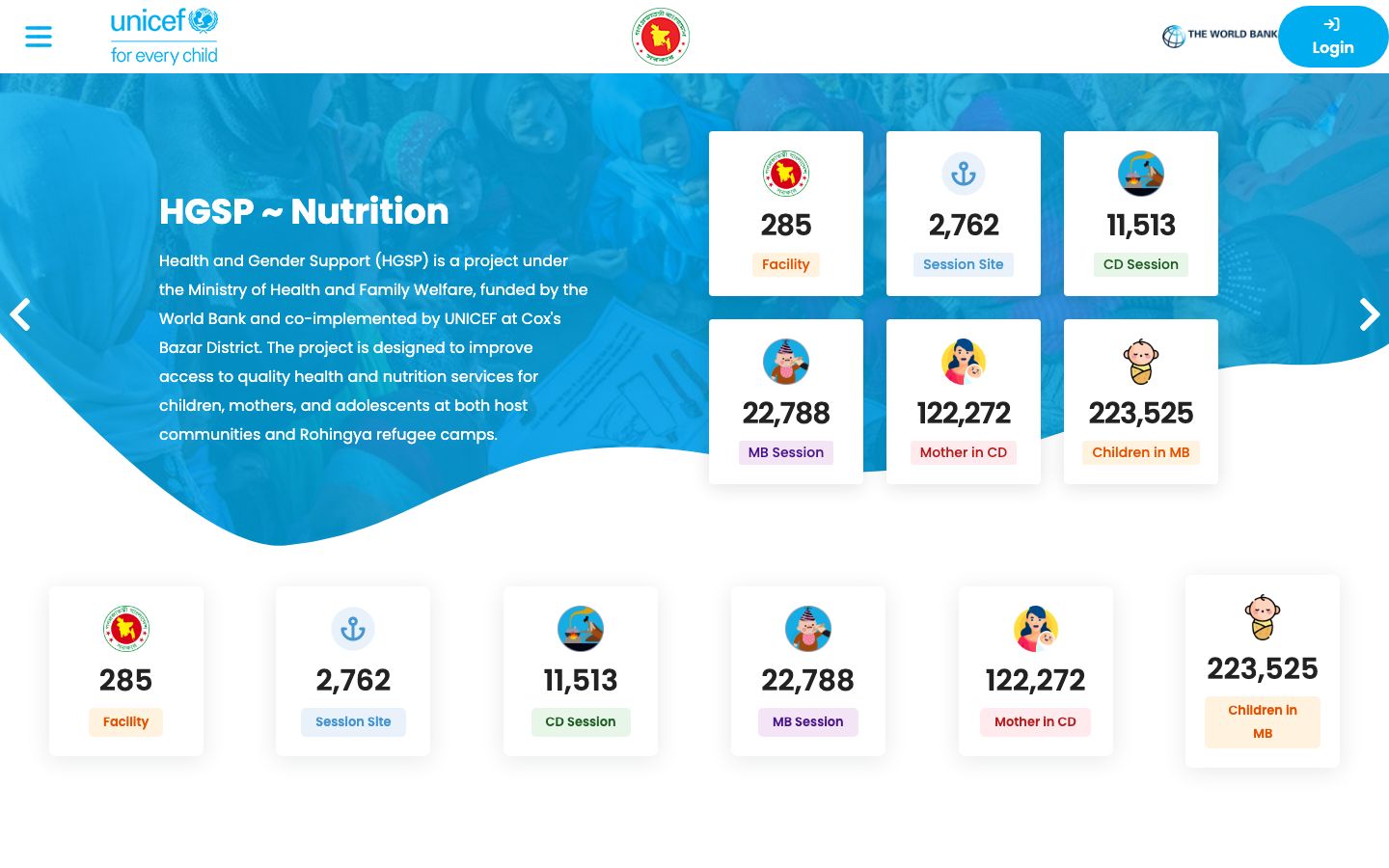
We build the digital backbone for prevention. Community health workers plan and record awareness sessions and household visits on apps that work offline, screen for risks such as blood pressure, blood sugar, child growth and pregnancy, and refer people on through a shared record. Every person is registered once with a unique identifier, ready to link to a health card, so follow-up and referral run from the same history. Dashboards show coverage, gaps and early-warning signals to every tier. These are working components: HGSP Monitoring planned and verified more than 34,000 community nutrition sessions across 285 facilities, and ENIM holds one record for more than 935,000 people.
Prevention becomes visible and measurable. Programme leads see which households were reached, which risks were found and who was referred; health workers spend less time on registers and more time in the community; and illness is caught earlier, when it is cheaper and easier to treat. Because the components already exist, a new programme starts from a working system rather than a blank page.
National direction
The Government of Bangladesh's FY2026-27 health budget sets out a move from a treatment-centred system to a prevention-focused one, built on strengthened primary healthcare. Digital tools are central to making that work at scale, and our solutions are built for this model.
Sources: BSS, National Budget 2026-27 (11 June 2026); Dhaka Tribune (3 August 2026)
Where we contribute
Plan, schedule and verify community sessions such as cooking demonstrations, counselling and health education, with attendance recorded at the session. On HGSP these sessions numbered more than 34,000.
Offline apps for community health workers to record household visits and screen for blood pressure, blood sugar, child growth, pregnancy and other risks, with referral at the point of care.
Due-date tracking and reminders for vaccinations, growth monitoring and promotion for children, and alerts for missed doses and check-ups.
Antenatal and postnatal care, IYCF counselling, iron-folic acid supplementation and adolescent nutrition, recorded per person as on ENIM.
Individual registration with a unique identifier, ready to link to a national health card, an integrated patient management system and electronic referral to secondary care.
Risk flags and early-warning dashboards that surface rising malnutrition, high-risk pregnancies or uncontrolled blood pressure before they become emergencies.
Live maps of facilities and session sites, field activity tracking and performance indicators, so supervisors support health workers where they are needed.
Learning and assessment platforms such as ELAP, so health workers move from paper to digital with confidence and keep their skills current.
What we work with
Android, iOS and cross-platform apps, with local storage and sync for unreliable networks.
Read moreConnects new software to the ERP, registers and platforms an organisation already runs.
Read moreDashboards, scheduled reports and self-serve analysis built on governed, reconciled data.
Read moreWeb and back-end systems built from requirement analysis through to production.
Read moreCase studies

UNICEF and the Nutrition Sector, Cox's Bazar
The nutrition information system for the Rohingya response in Cox's Bazar: one case-based record for more than 935,000 people across 33 camps, with real-time monitoring.
Read the case study: ENIM →
UNICEF Bangladesh, for the HGSP nutrition programme
A web dashboard and mobile app that monitored nutrition sessions at community facilities across Cox's Bazar district, online and offline, for a Ministry of Health and Family Welfare programme co-implemented by UNICEF.
Read the case study: HGSP Monitoring →
UNICEF and nutrition partners, Cox's Bazar
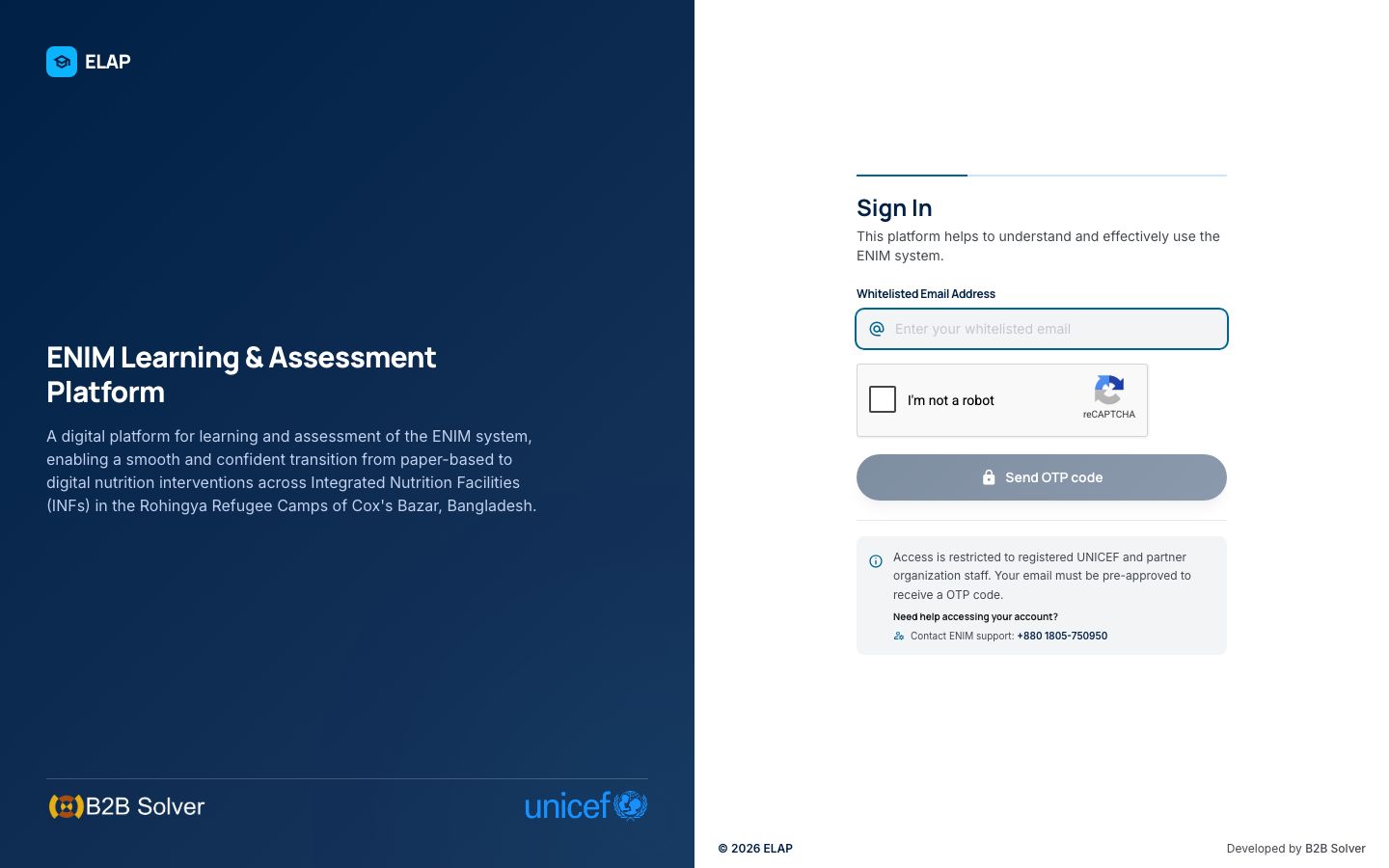
A learning and assessment platform that helps staff at Integrated Nutrition Facilities in the Rohingya camps move from paper registers to the digital ENIM system with confidence.
Read the case study: ELAP →
UNICEF Bangladesh, for the HGSP nutrition programme
An Android app that recorded the field movement of nutrition counsellors in Cox's Bazar district to calculate performance indicators for the HGSP programme.
Read the case study: HGSP Tracker →Questions
We build the digital tools that make prevention work in the community: planning and verifying awareness sessions, household visit and screening apps for community health workers, immunisation and growth monitoring with reminders, health card registration, electronic referral and early-warning dashboards. They work online and offline.
Yes. We build the systems that plan, schedule and verify community awareness sessions and record who attended. On HGSP, frontline staff submitted session plans for cooking demonstrations and Mukhe Bhaat ceremonies from a mobile app, and the platform recorded more than 34,000 sessions. We also build digital campaign platforms for wider public outreach.
The government's plan relies on community health workers visiting households for screening and referral, a health card linked to patient records, and electronic referral. Our ready components cover each of these: offline household visit and screening apps, unique-ID registration ready to link to a health card, referral tracking and dashboards for every tier.
Yes. Field apps record data offline and synchronise when the network returns, so health workers keep working in areas with weak connectivity. HGSP Monitoring and ENIM both work this way.
We delivered HGSP Monitoring and HGSP Tracker for UNICEF Bangladesh, supporting the Health and Gender Support Programme, a Ministry of Health and Family Welfare project funded by the World Bank in Cox's Bazar district. We develop and maintain ENIM, the nutrition information system for the Rohingya response, and its learning platform ELAP.
Next step
Describe the problem in a few lines. We agree a short call before we propose anything.